Terramation

022 - The Science of Swearing, Hobbies of Geniuses, and Cultivating Flow - HealthHippieMD Week In Review

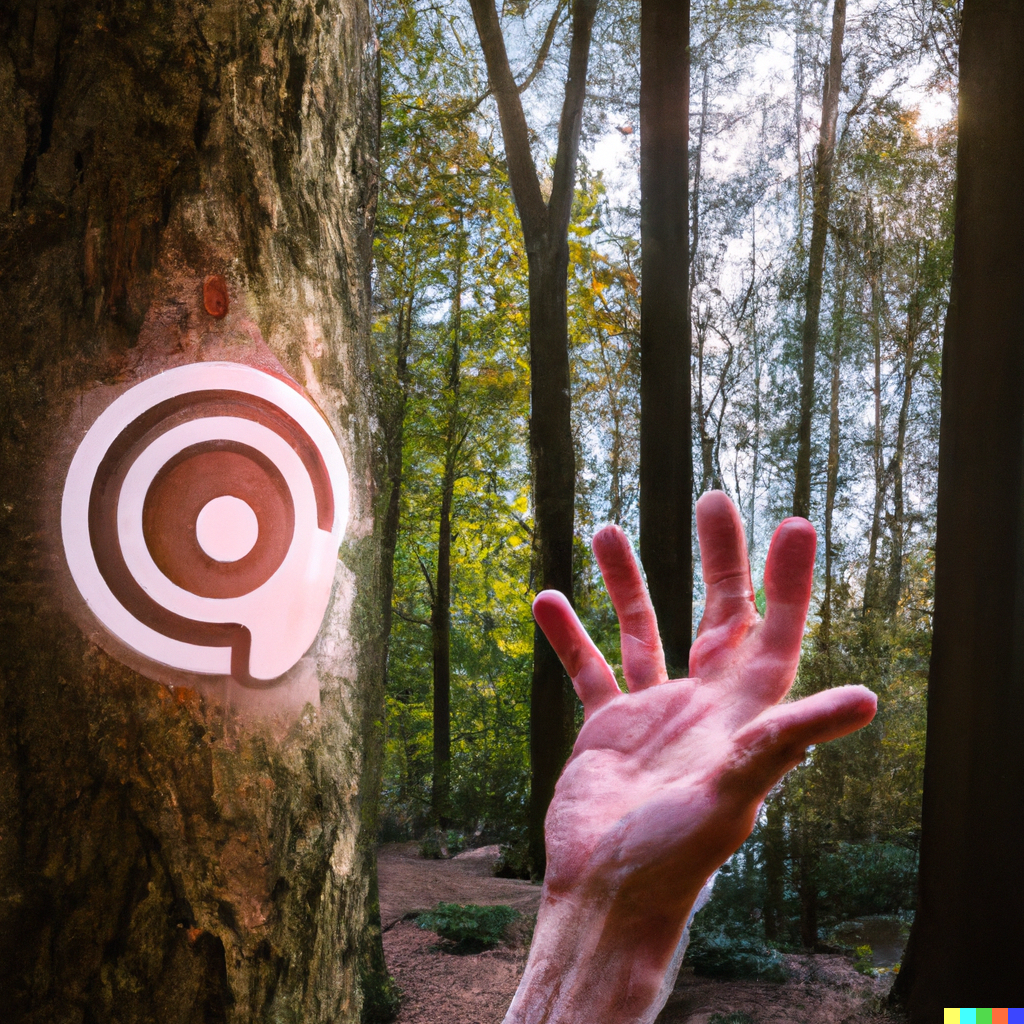
Image generated by DALL-E (picture in the forest incorporating, health, wellness, and technology).

I will be taking a couple of weeks off from curating. The newsletter will return on January 1, 2023. Have a safe and healthy holiday season!


OpenAI

I've been seeing a lot of press lately about the OpenAI project. The OpenAI project will force us to rethink what it means to be creative and will offer a new set of challenges for education, academics, and intellectual property: ChatGPT's Most Charming Trick Is Also Its Biggest Flaw. For more on using ChatGPT in creative writing, see Structuring Creativity: Poetry Generation with ChatGPT. For generative art, see: DALL-E I had to try it out.

+More on ChatGPT and education: Will ChatGPT Kill the Student Essay?

Forever Chemicals and the Kitchen

Following up on an article I mentioned in 018 - Living Medicines, Dangerous Cookware, and Toad Licking, an article in the Guardian, Wooden spoons and glass mugs: how to avoid toxic chemicals in your Kitchen has some valuable advice on how to minimize your exposure to forever chemicals. (thanks, Lauren!)

Whole Grains

The good news: Americans are eating more whole grains than ever before. The bad news? Because of imprecise labeling, no one is sure exactly how much: What Are Whole Grains and How Many Should You Eat? - The New York Times (gift article).

Solitude and Single-Person Dates

Take Yourself on a Date is an article on solitude and how (and why) to enjoy dating yourself. The article mentions a must-read book: The Artist's Way.

The Science of Swear Words

I loved this article looking at the commonalities of cussing across different cultures: Scientists want to know why swear words share this one universal trait

Opinion Piece on Human Composting

Dying is expensive. I had no idea a burial plot in Manhattan (before other funeral expenses) could run up to $1 million. The author of Opinion | Human Composting Should Be an Option for New Yorkers - The New York Times (gift article) thinks New York should be the sixth state to legalize terramation. See also: 014 - Terramation, Farmacies, and Edible Cities and 015 - Deja Vu, Pilates, and Recycling Theater.

The Dark Side of Body Building

The Washington Post had a long, interesting article on how many bodybuilders go to great extremes to compete: Extreme training techniques push bodybuilders to death, or close to it. (gift article)

Stretching for Better Sleep

Stretching and meditative movements (like yoga) before bed can improve the quality of your sleep. The New York Times offered an article with eleven stretches to incorporate into your evening routine: 11 Exercises For Better Sleep - The New York Times (gift article).

Entering Flow States

As part of my research, I spent a lot of time studying positive psychology. One of my favorite concepts is "flow," where one becomes so involved in the task that the world melts away and time is distorted. Here are some ways to increase flow in your life: We all can reach a "flow state." Here's how. If you'd like to learn more about positive psychology, a great place to start is Martin Seligman's Flourish: A Visionary New Understanding of Happiness and Well-being.

The Hobbies of Geniuses

I enjoyed reading The hobbies of 5 great geniuses.. I was especially interested in Albert Einstein's love of music. Einstein, a talented musician, carried "Lina," his violin, everywhere he went. He used music to help him think: Inside Einstein's Love Affair With 'Lina'—His Cherished Violin. _"Life without playing music is inconceivable for me," Einstein declared. "I live my daydreams in music. I see my life in terms of music … I get the most joy out of music." _

Silent Synapses and Memory Generation as an Adult

A recent paper published in Nature used mice to understand memory generation and recall as we age: How adult brains learn the new without forgetting the old | The Economist

Ultraprocessed Foods and the Aging Brain

A study published in JAMA Neurology, consisting of 10,775 adults, showed that higher intake of UPF was significantly associated with a faster decline in executive and global cognitive function. The article, Ultraprocessed Foods Tied to Faster Rate of Cognitive Decline, discusses the findings and shortcomings of the study.

Gatorade of the Ancients

Here is a strange article about posca, the hydration used by Roman soldiers: My Favorite Beverage Is a 2,000-Year-Old Energy Drink From Ancient Rome If you'd like to taste posca, the article contains a recipe.......

Vitamin D and Cognition

A recent study from Tufts, Brain vitamin D forms, cognitive decline, and neuropathology in community‐dwelling older adults found a correlation between higher levels of vitamin D in their brains and better cognitive function. The article, Brains With More Vitamin D Function Better, discusses the findings.

015 - Deja Vu, Pilates, and Recycling Theater - HealthHippieMD Week In Review

Fight for the Soul of Pilates

An interesting story in the NY Times about the fight over Joseph Pilate's legacy (gift article) The Fight for the Soul of Pilates.

Technology and Shallow Relationships

It's well-known that frequent social media use contributes to feelings of loneliness and depression. Despite this, technology use accelerated during the pandemic. Arthur Brooks talks about how to combat over-reliance on technology in our relationships: Technology Can Make Your Relationships Shallower.

Predicting Long-Covid

A manuscript published this week, Early immune markers of clinical, virological, and immunological outcomes in patients with COVID-19: a multi-omics study, describes the use of multi-omics and machine learning to predict individuals who will develop long-covid.

Banana Genealogy

Everything you wanted to know about the origins of the modern banana: The Search Is on for Mysterious Banana Ancestors.

The Paradox of Atypical Anorexia

Eating disorders can affect anyone of any body, shape, or type. I learned quite a bit from 'You Don't Look Anorexic.' (gift article)

Lessons from a "Difficult Patient"

I enjoyed an essay in the NY Times about how medicine, in many ways, has lost its humanity. The article, Lessons From a 'Difficult Patient' (gift article), follows one physician's internal journey as she cares for a challenging patient throughout her training.

Understanding Deja Vu

I learned a few new things about the neuropsychological underpinnings of deja vu in the article: What is déjà vu? A psychologist explains this common but creepy phenomenon.

More Terramation

It seems like stories about human composting are everywhere. This article was in Slate: Composting offers a greener way to dispose of human remains.

Brain Cells on a Chip Learn to Play Pong

I found this article on brain-machine interfaces: Brain cells on a chip learn to play Pong within 5 minutes. Although the title is a bit sensational, I still find the concept disturbing.

Omega-3 Fatty Acids and Brain Health

In a new study, Omega-3's Linked to Improved Brain Structure and Cognition at Midlife, , the authors opined increasing omega-3 fatty intake might help preserve brain health and cognition in middle age. We still don't understand the mechanism of how omega-3 fatty acids work in the brain. My guess is the mechanism involves our endogenous endocannabinoid system, as I mentioned in 006 - Loneliness, Mucus, and Cannabinoids - HealthHippie Week In Review.

Return on Investment for Employee Wellness Programs

Michael Greger released the first video in a series focused on the business case for offering wellness programs in corporate environments: The Return on Investment (ROI) for Employee Health and Wellness Programs. His take after reviewing the literature: $3 returned for every $1 spent.

Rethinking Healthy Eating in Terms of the Microbiome

I loved the manuscript, Rethinking healthy eating in light of the gut microbiome. The manuscript synthesizes a wide range of information from around the world and makes recommendations on what constitutes healthy eating by promoting a healthy gut microbiome. I will be referring to this paper for a time to come.

The Rocky Road of Aspartame

I've had a long-standing interest in non-nutritive sweeteners. Aspartame, only one of many artificial sweeteners, is a multi-billion dollar product. Aspartame: Decades of Science Point to Serious Health Risks is a compilation of the primarily negative data on the multi-billion dollar substance. For a less critical view, see: The_History_of_Aspartame

Think You Are Responsible with your Recycling? Think again.

The article Big Plastic Wants You to Think You Can Recycle Your Yogurt Container, was eye-opening for me. Only a tiny fraction of plastics are recycled, and there is incredible resistance to doing so, given the cost. The take-home point of the article for me: buy fewer products made of ANY plastic.

Our Pets, Our Microbiome

I enjoyed reading Does owning a pet boost your gut health? on how humans and our animal companions swap bacteria -likely beneficial to our overall health and well-being. The one downside of the article is not being able to unsee the phrase "fecal patina."

Behold Envy, The Happiness Killer

Arthur Brooks tackles the topic of envy in the article How to Stop Being So Envious. The article touches on social comparison, social media, and the importance of authenticity. In addition, he offers a few practical suggestions to minimize the role of envy in your life.

Making Better Use of Antidepressants

I learned a lot from the article, How to make better use of antidepressants (pay-wall). I did not realize that 10-15% of the population is on antidepressants, many for a very long time. With the serotonin theory of depression recently called into doubt coupled with a re-examination of this class of drug's efficacy (only about 15% response rate, mainly in severely depressed), it is likely time to reexamine our overuse of these medications, especially in the elderly.

New Evidence Linking the Microbiome to Rheumatoid Arthritis

The 2017 paper, Evidence of the Immune Relevance of Prevotella copri, a Gut Microbe, in Patients With Rheumatoid Arthritis, hypothesized that a protein produced by a common gut bacteria, Prevotella copri, could trigger the immune system and lead to arthritic inflammation. A new study summarized in New evidence linking gut bacteria with rheumatoid arthritis development provides further evidence supporting the 2017 hypothesis.

Quote of the Week

"Without music, life would be a mistake." - Friedrich Nietzsche (thanks, Lauren!)

014 - Terramation, Farmacies, and Edible Cities - HealthHippieMD Week In Review

Are You Still the Same You?

I enjoyed the essay in The New Yorker, Are You the Same Person You Used to Be? about how our personalities and our views of ourselves often change over a lifetime. _"We change, and change our view of that change, for as long as we live."

A New Role for the Cerebellum

In medical school, we were taught the cerebellum was primarily involved in the coordination of body movement. As with the majority of the brain, reality is much more complicated: A New Function of the Cerebellum

Food as Medicine - Welcome to the Farmacy

The concept of food as medicine is gaining acceptance. How to Prescribe Food as Medicine is a quick overview on the topic. I especially appreciated the links to the American College of Lifestyle Medicine white papers .

Human Composting / Terramation

There is now an alternative to cremation or burial after death; Terramation or "natural organic reduction," turns your body into soil. In fact, human composting is now legal in five states.

Electrical Memory Prosthesis

Here is an interesting article about a DARPA-funded initiative, centered at Wake Forest and University of Southern California, to help with memory formation. Brain-zapping tech improves memory by more than 50%

The Rise of Edible Cities

Edible cities are growing in the U.S. and Europe I love the idea of an "edible city," a place where space is rehabilitated with fruit and vegetable plants with food free for the taking. Check out the Edible Cities Network to see if there is an edible city near you.

How to Strengthen your Bond with your Canine Companion

Researchers are studying the human-canine bond in part to build better robotic dogs. The article, Want a better relationship with your dog? These 7 factors are key, describes ways to bond with your biological canine companion today.

Recognizing Smell from Molecular Structure

Here is an interesting article about attempts to use machine learning to determine how a substance smells solely from its molecular structure: AI Model Links Smell Molecules With Metabolic Processes

Gaslighting in Scientific American

Scientific American is one of my favorite magazines. I was surprised to see an article on gaslighting, but How Gaslighting Manipulates Reality taught me a thing or two.

Chasing Success and Happiness

Many people chase achievement because they believe it will lead to happiness/well-being. Arthur Brooks writes most people have the equation backwards.....Why Happiness Is the Key to Success

+Arthur Brooks was also featured on The Peter Attia Drive Podcast talking about the science of happiness talking about his book, From Strength to Strength: Finding Success, Happiness, and Deep Purpose in the Second Half of Life

The Real Paleo Diet

Although today's Paleo Diet is all the rage, it is historically innacurate. If you're interested in what our ancestors truly ate, the article, The “paleo” diet bears little resemblance to the real thing, offers insight from a professor of evolutionary anthropology and global health.

Changing Baseball through Diet

Baseball's athletes are far behind many other professional sports when it comes to the use of nutrition to enhance performance. The NY Times article, How Team Dietitians Are Changing How Baseball Players Eat, explains.

How to Tell Good Research from Bad

The article, Psychedelic drugs: how to tell good research from bad, offers great advice on how to spot good and bad research, and not just the psychedelic kind.

Inventing Food

Meet the Man Who Invented Cool Whip, Tang and Pop Rocks talks about a General Mills chemist who invented some of the iconic (unhealthy) foods of my youth.

Left-Handedness

I hadn't really thought much about handedness. About 10% of the population is left handed. I knew that lefties are considered more creative and are statistically more likely to be president of the U.S. I did not know lefties are more likely to be elite athletes or to suffer from mental illness: Why left-handed people are likelier to be mentally ill.

The Microbiome and Brain Macrophages

In newsletter 003 - Mad Honey, Frisson, and Psychedelic Capitalism, I mentioned one of the foundational papers in Alzheimers research had been called into question. One of the alternative explanations for the cause of Alzheimers is dysregulation of the immune system of the brain. Here is a synopsis of a pre-clinical study that supports the alternative conclusion: Age-related changes in microbiome composition affects brain macrophages. And here is a link to the paper: Age-dependent effects of gut microbiota metabolites on brain resident macrophages

Lateral Thinking

I'm fascinated by metacognition, so the article, The most undervalued problem-solving tool? Lateral thinking, was catnip for me. The article starts with a puzzle that caught my attention and went on to describe the phenomenon of lateral thinking-a process highly correlated with creativity.

Quote

“Our bodies are our gardens – our wills are our gardeners.”
– William Shakespeare